Select a section to jump straight there.
If you're eager to start your own business, this story is for you.
If you have a business idea, this story is for you.
If you've already started a business and are working hard on it, this story is also for you.
you have a table and chairs at home, this story is for you.
Yes, a table. The size doesn't matter. Nor the material. What matters is what happens around it.
How many businesses were born within a family? How many around a family table? Surely there are millions worldwide, but each business is unique, just like families, the people who make them up, and the stories they build.
And this is a unique story, but it could very well be yours.
However, there are high doses of passion, commitment, effort, and perseverance, without which a great idea will always remain just that.
Ultimately, entrepreneurship is about moving from idea to action; it's about movement; it's about taking risks, making mistakes, learning, and trying again. It's the passion to do better every day.
But the most important thing, the thing you can never lose sight of, is that a business can ultimately be anything you want it to be. It's just a matter of challenging yourself, not giving up, and thinking big even when taking small steps.
We are used to stories having a beginning and an end. This story fulfills the first condition, but it continues to be written and multiplied, not only in its own transformation, but also in the millions of people were directly or indirectly impacted.
It's a story that doesn't have an ending, but it does have a purpose. They sound similar, but they aren't the same. What's curious is that this purpose is in the beginning. And it's not a contradiction, because it's a purpose embraced by the goals that, from the start, illuminates the path and reinforces the desires and aspirations rooted in the values of an entrepreneurial family: that of Don Lucas Santiago and his children Lucas, Sebastián, Celeste, and Gonzalo.
It was them who, around a table in the kitchen-dining room of a typical middle-class home, engaged in the natural conversations of any family, but tinged with the passion of a business linked to ice cream.
That was the universe in which a started a spark, its shine was only truly perceived by those who created it, those who witness moments when the everyday takes on an unexpected significance. But it was an idea that, strictly speaking, didn't mature overnight, nor was it born out of chance. It developed over the years. First, in the restless thoughts of Don Lucas, fueled by his family and personal experiences; then, with the lessons learned from business ventures; and finally, with the fresh perspective and a new set of values that his children added, giving it a color and shape that allowed it to evolve as a concept and, last, as a business in its own right.
All this happened around the family table of a home that was separated by just one door from an ice cream shop, located on one of the corners of the oldest square in the Alto Alberdi neighborhood, in the city of Córdoba, Argentina.
That was the point where many things intersected. Nothing less than past, present, and the construction of a future. Understanding this amalgamation involves a journey into the heart of the Santiago family's DNA, to the place where a vision resides and where connections are forged with the paths that lead to pure innovation and evolution.
In that magnetic space of time in which the 20th century was fading and the next one was emerging, in an environment where there were no boundaries between business and family, a matrix was formed in which something absolutely new was conceived and came to light.
As in biology, the result was a genetic chain that had, from its very start, the elements for the development, functioning and reproduction of the Grido community and ecosystem, which in just 25 years became the fourth largest ice cream retail chain in the world.
The alarm clock breaks the silence of the early morning.
The austere kitchen still retains the smell of dinner, but it will soon be mixed with the smell of coffee.
It's a couple of hours before dawn. Don Lucas's eyes burn with sleep. As he heads toward the production room, he hears the news on the radio about new economic measures. It's the turning point between 1989 and 1990. Argentina is drowning in hyperinflation.
Despite this chaotic environment, business is good. Don Lucas is thinking about this, along with the experience he's gained in recent years, after selling his share of the company to his brothers Raúl Alfredo and Juan Carlos.
It's true that I had assumed I would end up being the buyer, not the seller. It happened the other way around. That's just how it is.
The bottom line is that this situation had led him to focus on his own business: an ice cream shop. His ice cream shop.
It wasn't his first entrepreneurial venture. Nor would it be his last. From a young age, his world and work ethic had been involved with ice cream. But there was something he'd never done before: make and sell his own ice cream.
At a young age he had been involved with Águila Saint, the company that was a school of life for his father. In addition to chocolates and other products, which also produced and marketed Laponia ice cream.
His father Lucas, who had started working as a child at the company in a Buenos Aires neighborhood called Barracas, was in charge of the distributor in Córdoba, where he had settled after starting a family with his wife, Urbana.
In those years, the ice cream business was very seasonal: it boomed when the temperature rose after spring and paralyzed with the first autumn chills. During that time, work started.
Work was multiplied: answering the phone with customer orders, unloading the ice cream from the trucks which came in 10-liter tin containers–, arranging the merchandise in the cold storage rooms, reloading to supply the ice cream shops that operated in downtown bars.
Moreover, that was the prelude to his first business. With his brothers –both elder than him– they managed to convince their father to manage for them a Lapland distribution area in the city of Córdoba before his retirement.
He assigned them the last developed area, and therefore one where business was almost nonexistent. And he instructed them to work in partnership with a trusted employee whom he greatly valued.
The work was intense, every day, even Saturdays and Sundays. But the effort, as always, paid off. They reached higher sales levels than the distributor who served what, until then, had been the most dynamic area for the business until then.
The lessons learned from Laponia format would for ever accompany Don Lucas in his strategic vision for ever. On one hand, to aim to have the best possible product; on the other, to develop a quality model that doesn't necessarily imply higher costs, but rather greater efficiency, through the increase of knowledge and improvements in production and commercial processes.
In between, there was a break in his involvement with the ice cream business that faced him to his first challenge of scale and involved a series of intense lessons. It was then when he was offered the opportunity to sell coffee, a proposal that led him to market this beverage at the Fiat automotive plant (which became part of Stellantis in 2021) in Ferreyra, southeast of the city of Córdoba, where around 9,000 people worked in the mid-1960s. Almost a city within a factory.
The business margin was such that the profit was equivalent to the value of a brand new car at that time .
That experience helped him to learn about the importance of timing, where attitude and skill combine to read the environment and make decisions, even when not all variables are under control. There will always be time to adjust.
Other lessons learned included risk tolerance, adaptability, and flexibility to quickly adjust to new environments, especially when that involves uncertainty and living with a certain degree of stress, which also needs to be learned to be managed.
And of course, to consolidate a culture of work, effort, dedication and perseverance to achieve the goals and commitments undertaken.
He also highlighted a practice that would later become a habit: reinvesting profits. That's what he did with a big amount of his earnings.
But coffee wasn't his destiny. His heart claimed so he invested the money going back to the world of ice cream and strengthen the distribution business he had started with his brothers, which evolved into a supply store for the industry (La Casa del Heladero) and years later added its own cone factory (Alta Rotación).
But the next step would be his own ice cream shop, the one he focused on 100 percent after agreeing with his brothers to exit the business they had developed.
He considered calling it Plaza, because it stood on one of the corners facing Jerónimo del Barco Square, in the Alto Alberdi neighborhood of Córdoba. He also considered the name Alberdi, in keeping with the area.
In the end, she decided for a classic approach: mixing names. He named it Marvic, after Mariano and Victoria, the manager´s son and daughter that worked there.
Marvic soon became, for its customers, simply "the Marvic ." And it was, in every sense more than just an ice cream shop, starting with the fact that for Don Lucas, besides being his business, it was also his home. He moved in. One door separated his living space from the room with the manufacturing machines. Another door served as the gateway to the shop counter.
The first week was almost entirely deserted, with hardly any sales and far too many curious onlookers. Typical for a business opening its first week.
That's why he didn't hesitate when they suggested him to lead a survey in the neighborhood about the reach of the ice cream shop. The survey revealed that 13% of people knew about it and bought ice cream at Marvic , but the remaining 87% didn't buy ice cream in the neighborhood.
Instead of worrying, Don Lucas saw an opportunity in those numbers, a clear area for growth. From the very start, he understood that with a few actions he could double sales and focused on improving the experience at his ice cream shop.
This led him to create a pleasant environment in the plaza, adding playground equipment, cleaning it, fixing the benches, adding lighting, and playing music on the corner. He even tried to persuade other ice cream sellers with nearby shops to join in this effort, but he didn't get the response he hoped for.
Even so, he wasn't discouraged. Every Sunday, it was common for neighbors to see him crossing the street early in the morning with a hose to wash the public space and get it ready for families to enjoy while strolling there.
Marvic would be the epicenter of a community and also the cradle, not of one, but of successive stories linked in the heart of a typical middle-class neighborhood.
And it woud also be a crucial space for the family, because it was the environment in which Don Lucas's children grew up in touch with the business, same to what happened to him and his brothers with their father's distribution company, although there was a significant difference: this time, the venture was a family business from bottom to end. And it was a source of pride, sometimes silent, sometimes explicit, but experienced with a genuine naturalness that broke through from father to sons in that deep and sometimes unnoticed fabric of daily life.
The ice cream shop, which had opened in 1986, added a bar five years later. Within those square meters, a sense of connection was forged, first experienced by Lucas and Sebastián, the eldest sons, and later by Celeste and Gonzalo. They all spent a good part of their teenage years there, helping out occasionally, then more regularly, until the business completely absorbed them, or perhaps they absorbed the business. The order doesn't matter.
Don Lucas replicated with his children the core of a work culture he absorbed from his father, with the natural nuances that each person brings to those experiences. He tried to reduce its hierarchical structure and increase its horizontality.
New generations first observe and learn. They are like sponges, in an environment where everything flows naturally. The perfect symbiosis.
Lucas, the eldest son, has his earliest memories of the business his father ran with his brothers. Going to the depot to load trucks on Saturday mornings was like a game.
Then came the summers of my teenage years with Sebastián at Marvic . Sometimes I worked in the production room, helping the people who made the ice cream. Other times, my job was to help at the till and serve customers. And I also had to take care of cleaning the shop and the tables.
The same thing happened with Celeste as she grew up. And for Gonzalo, the youngest, the family business made every child's dream come true: living in an ice cream shop.
Ultimately, living in those spaces involved the natural learning of a way of doing things, getting to know the environment, the trade, helping and learning from the people who worked there.
That whole universe, which revolved around ice cream and a father with an entrepreneurial spirit, was like a training school for the personal development of each of the children.
The business, which was limited to the square meters occupied by Marvic and the impact on the area of influence, would begin to experience an evolution in which the roles that the children were assuming gained power, now in a more intense and specialized way.
Lucas focused on administrative, accounting, and tax tasks. Sebastián deployed his business skills and boosted innovation by contributing disruptive ideas and formats. Celeste initially interacted with the administrative and accounting departments, but later embraced team and people management, while Gonzalo gained experience working from the periphery to the center, initially managing several locations before becoming involved in the internal operations of various business units. In this dynamic, the children brought a new scale, pushed boundaries, and added greater levels of challenge. They shook up the environment that Don Lucas had reached and which he assumed was his final career stop. He had no idea that the best was yet to come.
A way of thinking, a way of doing things, a culture. Everyday´s family conversations wove invisible threads. Marvic was a natural habitat for that tapestry to unfold simultaneously between business and family, in every space, in every corner where home and ice cream shop merged together .
But there was a special atmosphere, a place where eveyday´s dialogues forged a matrix of gestation, a nest fed with conversations, ideas, experiences and a nourishing exchange of knowledge and thoughts.
If Marvic was the very heart and soul of entrepreneurship, the family table was the epicenter where bonds and personal relationships provided space for dialogue, analysis, discussion, and decision-making regarding a business that was beginning to step out its own boundaries. This space, as real as it was symbolic, also revealed the framework that Don Lucas had absorbed since childhood. But this time it was different. Everything coming out from the family circle was a continuous feedback loop for their own business.
When someone starts a business, in addition to developing an idea, they also decide who to partner with. Many does it alone, others seek friends. There are also those who prefer partners with a specific profile. Don Lucas, it was clear, had already chosen: he wanted to start a business with his children. In Argentina, an overwhelming majority of small and medium-sized enterprises (SMEs) were founded and still operate as family businesses. The same is true for many startups.
One of the main characteristics of this type of organization is the aspiration to build a legacy, a vocation for continuity through new generations, even while encouraging each member to pursue their own personal and professional development.
Initially, this role manifests as a high degree of concentration on the founder, who is the one who has everything in his head. This is even more pronounced when that person is also the head of the family, because a powerful legitimacy emanates from him.
Don Lucas perpetuated a cycle, which was to transmit a culture nourished by his experiences. When his children were younger, what mattered was not what they did, but their profound learning, their values formation. Later, as they grew older, they began to take on specific roles, even linked to their interests, their skills, and the knowledge they were acquiring.
With the ups and downs of any family, the purpose was and is, to keep and consolidate healthy relationships, based on trust and mutual respect.
Lucas and Sebastián were the first to experience this sequence of events. In the mid-1990s, Don Lucas practically delegated the day-to-day management of Marvic to them so he could help manage a financial crisis facing the ice cream cone factory, which was run by one of his brothers. Those were intense days and months, during which gatherings around the family table were limited to just a few hours at midday or in the afternoon. But those moments, which concentrated everything, were vital for exchanging information and transforming a problem into an opportunity.
How was that possible? Having a good idea is important, but one of the most powerful incentives to start a business is not necessarily finding that idea, but finding a problem.
Don Lucas faced this problem head-on. The challenge was to increase sales at the cone factory to ensure the necessary income stream to overcome the crisis.
Simultaneously, a commercial phenomenon had emerged: a low-priced ice cream that was sold in 5 and 10 liter containers in a wholesale hypermarket that had recently opened in the city of Córdoba.
The price per kilo of that product was very competitive, equivalent to half the average price at Marvic . Many people who owned businesses bought that ice cream and then resold it. Then the magic happened. At the family table, Don Lucas shared a memory. He had recalled a conversation with a customer from "La Casa del Heladero," the distribution business he had shared with his brothers years before.
That person had surprised him with an unusual purchase of ice cream cones. The quantity ordered was completely unrelated to previous transactions. The reason was the sales of a very inexpensive product, a water-based ice pop that he sold in outlying neighborhoods of the city of Catamarca, in northern Argentina.
Marvic 's demand kept the machines busy for 8 to 10 hours a day, leaving up to 14 hours free. They needed to adjust the formula to make a lower-priced ice cream, but with the best possible balance between cost, quality, and final value. The focus, then, was on getting organized, finalizing the proportions, testing the product, and starting to map the market.
Sebastián was already in his final years at the Faculty of Economic Sciences and from the very beginning he felt a sense of ownership over the new initiative. He took charge of the commercial structure, designed as a wholesale business.
Lucas, who had finished his university degree, maintained his profile in administration, which was his specialty and the role he had consolidated at Marvic .
They had both long felt that the family business, although doing well, needed to grow. The idea of a new ice cream product seemed like the perfect opportunity to face that path of expansion.
Sebastián began to build a network that was characterized by small shopkeepers running grocery stores or kiosks in lower-middle-class neighborhoods, or even in areas with households below the poverty line. These environments were the hubs for the retail links and the specific target audience for the new product.
Initially, the radar's range didn't extend beyond a few nearby neighborhoods. The ice cream was made at night and ready for delivery by morning. The owners of those businesses collected it in boxes and transported it to their sales points.
Word of mouth spread immediately because the selling price was unbeatable. Each ball cost 25 cents of peso/dollar (this was during the convertibility era, the monetary and exchange system that emerged after the hyperinflation crisis, through which, after devaluation, a conversion scheme was established that yielded an equivalence between the local currency and the US dollar) and, even with that value, the profit margin for the merchant was significant.
Demand began to grow, and that prompted the brand definition. Back at the family table. Thoughts aloud, trying to name the new venture.
Marvic brand . That's when Sebastián presented the proposals a graphic designer had given him, among which was Vía Bana. The launch was immediate and came with another innovation: they rented a garage in the next door house, where they installed cold storage units for both storage and distribution.
That's where the merchandise was picked up. A local taxi driver even made deliveries to those who couldn't pick it up themselves.
The pieces of the business fell into place at an unprecedented speed, and demand was expanding. One of the people working on the team helped identify locations with high potential—that is, areas where ice cream was not available.
A shift was slowly beginning to emerge in the ice cream consumption culture. Historically, customers went to the product. Then, street vendors became the hybrid connecting supply and demand. Vía Bana, however, became a new experience, where the product came to the consumers and remained in place.
The experience also enhanced the search for basic parameters, through which to establish the ideal indicators for each business that was part of the network.
Obsessed with calculations, Don Lucas had defined the equation and the expected result, a kind of minimum viable product. The key was that each Vía Bana outlet, on average, would be able to sell 600 cones daily, or 600 scoops of ice cream. The important thing was not to lose sight of the volume.
To solidify that equation, he took more risks. It was common practice for ice cream factories to provide a freezer to each business on loan, that is, a transfer on credit for the duration of the commercial relationship between the parties.
That same effect was replicated in the factory, which, with that flow, was able to acquire new machines that doubled its production capacity.
The network continued to grow; they added their own delivery service and began recruiting schools, especially those with a large number of students in different shifts. By then, they had already added the ice pop.
Suddenly, Vía Bana began to experience unprecedented growth, and the product reached Mendoza, La Pampa, Rosario, and other cities outside of Córdoba.
That practice will leave an indelible mark and also be the first step in a business model that seeked to expand ice cream consumption.
By the middle of the 1990s, most of the ice cream manufacturers in Cordoba had begun to develop their second, more economical brands, driven by the Via Bana model, which experienced its growth in volume between 1997 and 2000.
The scale was given by the comparison with Marvic , which continued to operate in parallel and with good sales.
The neighborhood ice cream shop that started it all sold around 100,000 kilos of ice cream a year. Vía Bana reached 400,000 kilos annually, with a network of 500 clients, more than 60% of whom were neighborhood kiosks and small grocery stores.
The scope was enormous and the evolution had been meteoric, but viewed from a distance, it was just the beginning of something much bigger.
Via Bana was the prelude to a new high-impact model, unprecedented in its characteristics and because it was going to multiply accessibility and opportunities at the base of the socioeconomic pyramid.
The years that closed out the 20th century were particularly complex in Argentina and ended in a deep political, economic, and social crisis. It was not the ideal context to start a new business.
But the entrepreneurial spirit, the vigorous drive of his children and an intense desire to forge family projects were the incentives to face and sustain initiatives that, from the start, were different from anything known.
Via Bana had been, in itself, a first innovative experience that validated a hypothesis: the possibility of maintaining a price/quality relationship appropriate to the purchasing power in areas of low economic resources.
Furthermore, it established a platform that decades later would be transformed into a high-impact inclusive and sustainable model through social ice cream shops.
However, what was about to born involved developing an unprecedented pattern, a productive and commercial structure that even challenged the ice cream parlor format paradigm that Don Lucas had lived with in the business.
When he started Marvic , his anchor was the artisanal ice cream shop, which he considered the most suitable unit. But the evolution would come with the transition to an increasingly intensive stage of industrialization, which led the venture to consolidate unexpected volumes, and towards a broad and powerful network of points of sale in non-traditional locations.
There are a series of charts that help to understand, in a simple way, how to go from data to information, from information to knowledge, and from knowledge to innovation.
Data is like dots scattered across a page. When we understand that some dots share common patterns or characteristics, we find information. And when we connect and relate this data in different ways, we access knowledge. Innovation, then, consists of establishing new connections between that data, new circuits, new ways of relating it in the long run it's a different and better way of doing things.
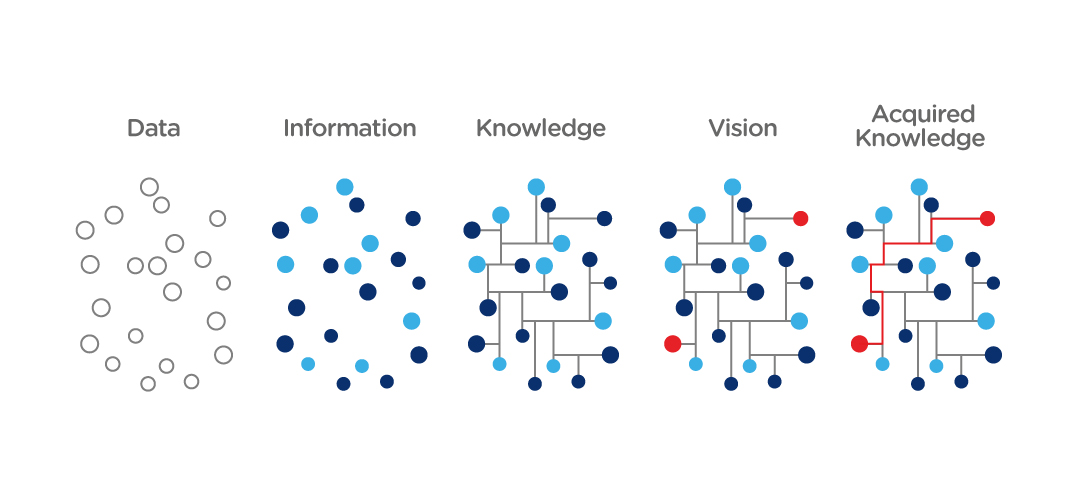
Often, connecting these dots involves reinterpreting previous experiences, as if it were a lightning trip to rescue past events, information that had been scattered or linked to a knowledge of the moment.
Something similar happened with Vía Bana, which had reached a peak in production and sales between 1999 and 2000. But Sebastián noticed that the point of maturation for that format, which operated on a wholesale basis, was very close.
So how to sustain a high-volume business that went beyond what had been experienced before? That's when the family table, once again, became that gestation space to connect the dots in a new way.
Sebastián Santiago said: "As Steve Jobs (the creator of Apple) said, you can't connect the dots by looking forward; you can only connect them by looking backward."
Another key element was proximity. And if that was combined with a competitive price, the value proposition was unbeatable.
There was, then, a huge market for developing the business. But opening branches involved high fixed costs. In fact, the experiences of brands that had invested in multiplying their ice cream shops were still fresh in everyone's minds, an expansion that, with the economic crisis, morphed into a retreat that, in some cases, ended in the closure of those businesses. So how could they reach those territories with competitive costs?
The franchise format. Conversations between father and sons brought light to the answer. Don Lucas connected with a past experience that had taken him to Buenos Aires to try to collect a late payment from a client for a large purchase from the cone factory he was helping to overcome financial stress.
He was surprised by the commercial structure of that firm, which had a network of about a hundred ice cream shops in the greater Buenos Aires area, with the administration outsourced in each location.
Consider the context. The macroeconomic environment was decidedly affected by the recession that had gripped the economy in 1999, when Brazil devalued its currency, a measure that Argentina could not replicate due to the constraints of the convertibility regime. Unemployment was already in double digits and was the prelude to the profound socioeconomic and political crisis into which the country would fall between 2001 and 2002.
The franchise model would allow the new venture to multiply with the help of other associated entrepreneurs under the umbrella of that system. It was a way to encourage self-employment and impact household finances with a proposal that involved the family, because the goal was to create franchisee owners, not just investors.
At the internal level, although the cone factory's financial problems had begun to improve, it remained highly dependent on a specific demand flow to generate revenue. This drawback would serve as an incentive to pursue a larger scale.
This prompted Lucas to open the project up to his colleagues in the industry, with whom he used to meet at Marvic . He proposed setting up a joint factory to supply a network of 200 stores. He didn't get the expected support and wasn't entirely convinced about facing the challenge alone. But Sebastián's enthusiasm and drive proved stronger. The decision was made.
A new product. They say every creation is born from a question. The question that Don Lucas had been dealing with for decades was about finding the best formula for a virtuous marriage between quality and price. Unraveling that thread has never been easy, because it sometimes seems like a paradox. The leap from artisanal to industrial production was part of the answer, but the core lies in a concept of quality that isn't limited to just the product, but extends to the entire organization of the business and incorporates and shares knowledge throughout the value chain.
Against this background , Lucas and Sebastián aimed to produce an ice cream with competitive costs, but one that would differentiate itself from Vía Bana while maintaining a similar quality to Marvic . Therefore, there were necessary some adjustments to the recipe. Production began in Marvic 's existing production facility . A new brand. Initially, they considered using the Marvic name for the venture , but Lucas didn't want to jeopardize his original ice cream shop if the project failed. So, every day he spent most of the time with Sebastián at the family table, brainstorming possible names for the new business.
They wrote down all the alternatives in a list and then refined it. One came up that they had seen, in passing, in an Italian magazine dedicated to the ice cream industry: Criko . That's how it would begin.
Simultaneously, they began searching for people and locations to open the first stores. Don Lucas wanted trusted employees who were part of the Marvic team to participate .
Sebastián also moved forward with setting up the ice cream shops, for which he had the support of a supplier who owned the furniture and signage from a once very successful brand that had expanded with a hybrid model including franchises, but which had begun to disappear from the local market. This gesture was key, because it gave them the necessary flexibility to cover the initial costs.
A few months later, the name changed, as a multinational company had launched an ice cream under the Kriko brand . The second name change, which in practice involved changing two letters, holds a curious coincidence. Grido, the final name, means "shout" in Italian. In retrospect, the analogy couldn't be more fitting. The creation was, in a way, a cry in the ice cream market, like the cry babies make when they are born to show they are there, present.
A cry that spread through thousands of neighborhoods and cities, and whose power could be seen over the years.
An equation. One of the model's strengths was the equation that solved the problem by determining the minimum sales volume each franchised location needed to be profitable. Don Lucas and Sebastián had already developed this practice with Vía Bana and replicated it with Grido.
All the infrastructure for the stores was provided on consignment, so each point of sale had to generate a profit margin of 1,000 pesos/dollars per month. This allowed them to cover the installments for the furniture and equipment, the cost of the merchandise, and the equivalent of a salary.
This meant that a store in the network had to sell 50,000 kilos of ice cream per year, which yields a per capita consumption of three kilos per year, a metric that evolves to keep pace with changes in demand.
In fact, Grido's impact on the domestic market has been significant, as ice cream consumption tripled in the country over 25 years, a period during which the brand became the leading manufacturer and seller nationwide.
Furthermore, the sustained increase in demand also impacted the entire sector, which meant a benefit for the entire ecosystem in general.
The first store opened in the San Salvador neighborhood, a residential area in the western part of Córdoba city—near Alto Alberdi—which had recently undergone a transformation with new homes and the flow of young families. Later, other businesses opened in nearby areas.
The first year there were 10 ice cream shops, all through word of mouth, because it was an initial trial-and-error phase. Sebastián was fully committed to the format; everything was new and that demanded continuous adjustments to align the different parts and manage the problems.
By 2001, they had already reached 40 locations, very close to their initial goal of 50. They always kept the same concept: a local, convenient ice cream at a very competitive price, designed to drive daily sales in the neighborhoods.
It was a model that ran counter to what usually happened, since other brands sought to set up shop on central streets or main avenues, in areas with high traffic and pedestrians. But the neighborhood worked, and the cost structure was much lower because rental prices were cheaper. They even rejected proposals from people who wanted to acquire a franchise but planned to establish the business in areas where the real estate market was more expensive.
The equation was clear and considered all the sensitive variables that affected the business to avoid unexpected deviations that could compromise commercial sustainability. And the system became more robust as more franchises were added, because a greater number of cases provided more validation for the metrics. The first exception to this rule was a store in one of Córdoba's shopping malls, which achieved high sales from the outset and also served as a marketing flagship to attract more franchisees.
One of the actions they took to accompany their initial steps was offering a cone with two scoops for one peso/dollar, a proposal they had implemented some time ago at Marvic at a customer's request. The price was unbeatable and had a significant impact on the market.
In the third year, they opened their first location outside the city of Córdoba. It was in the town of Deán Funes, 130 kilometers north of thecapital. They already had almost 70 franchises and would soon begin to grow at a rate of 80 to 100 new openings per year.
Sebastian realized that this was the moment to evaluate and validate the business model, because it was working: the original goal of 50 ice cream shops, which was immense when it was set, had exceeded in just three years.
And the architecture sustained by the cost-efficient franchise format expanded the network of key partners at an unprecedented speed; these were the families who joined the ecosystem, that is, franchisees who owned their ice cream shops.
But all production remained confined to Marvic 's factory . The time had come to reorganize, with a new plan, because the sequence implied that it was time to move on to strengthening the business.
At Marvic , the production room was barely 50 square meters. Ice cream was manufactured using two Labotronic machines from the Italian brand Carpigiani , around which operated two pasteurizers, two chillers, and four aging tanks, all with a capacity of 60 liters and also under the Carpigiani brand .
There was also a machine of the same brand for producing sticks, with a capacity of 500 units per hour.
In the late 1990s, shortly before the start of Grido, a Technogel continuous production machine (also of Italian origin) was incorporated, with the capacity to process 300 liters of ice cream per hour.
They also added five 180-liter ripening vats and a cooker of the same volume, with a cooling plate.
That was, in a way, the first industrial module, but it still used in artisanal practices. In fact, the eggs were cracked there, the lemons were squeezed, the fruit was peeled, and the almonds were roasted. It was Marvic 's recipes combined with an industrial process.
By then, the production area had expanded to 65 square meters. They also added a colloidal mill, and the storage chamber had a capacity for 1,000 cans.
The creation of Grido involved investing in new equipment and multiplying production volume, which grew by 600%. The processing room was also expanded, and a new 200-square-meter warehouse was opened.
But the next step would no longer be so small after three dizzying years, Grido was leaving Marvic to settle in its first home of its own: a new factory in the General Paz neighborhood, the territory of Don Lucas's adolescence and youth.
The plant, with around 1,000 square meters, involved another significant investment in new machinery, with technology and processes suited to a higher demand.
At that point, the involvement of Lucas, the eldest of the brothers, who had returned after spending several years in Europe, was essential.
The original trinity of Don Lucas and his two eldest sons, who nurtured the mystique of their heritage every day around the family table, once again resonated. While Don Lucas provided guidance with his experience and Sebastián innovated the business model, Lucas became the hub for Grido's comprehensive restructuring.
He was entrusted with the management of the general administration, coordinating and adapting the structure to the new production and commercial phase. He also engaged with new suppliers to keep pace with the rapid growth and provided the company with financial intelligence and skills to guide the expansion process that was just beginning.
The maturation tanks, for example, increased their capacity to between 600 and 2,400 liters (previously they were 180 liters). In addition to the Technogel equipment (one for double mixing and another for blending two flavors), a continuous-use 1,500-liter/hour production line was installed, which operated with ammonia refrigeration, a technology they adopted for the first time and would never abandon.
Another important change was the start of receiving fluid milk by truck and, later, that raw material with a higher fat content. The same happened with cream and sugar shipments. This led to work on assembling the batches , which are the mixing tanks.
The product range had been expanded to include ice cream cakes, and adaptations were made for filling the final containers, thereby increasing production volume.
The production of sticks was reinforced (the new stick-making machine was capable of delivering 2,000 units per hour), a guillotine for chocolate portions was installed and a chocolate coating machine was incorporated, next to which a drying tunnel was built, which allowed for the first continuous semi-automatic chocolate production line.
At that time, the company's structure was the most advanced on the local market, and the production pace was frenetic, with 12-hour shifts. Grido reached its first million kilos of ice cream at this plant.
Everything was happening very quickly because commercial activity was relentless, and this was reflected in the first link of the chain, which was production. The feeling was that they were always playing catch-up, constantly working alongside expansion projects.
It didn't take long for them to realize that the new house was already too small and there was no room to expand. Under these circumstances, and looking for places to grow, Lucas Jr. found an industrial park that was being developed and quickly considered it a possible location for the new factory, given its size and future potential. This led to the purchase of a plot of land in the Ferreyra industrial zone, south of the city of Córdoba. More than 20 years later, the consequences of that vision and sound decision are evident in the importance of having square footage for growth.
In 2004, as soon as the deal was finalized, work began on the new factory project. Tests were also conducted and implemented at the existing plant, such as switching from plastic containers to cardboard tubs for bulk ice cream.
That change was necessary because it significantly improved the cost equation. Meanwhile, on the other hand, word of mouth was wild, and the growth in the number of franchises seemed limitless. The first location outside the province of Córdoba was in the town of Chilecito in La Rioja province. Interestingly, when Grido arrived in that city, there were already two ice cream shops facing the main square. And they're still operating, which means that not only was there a market, but they all improved, raising the bar for competition, which ultimately always benefits the consumer.
The driving force behind this movement remained the concept of establishing a foothold in areas lacking a consistent ice cream market. This was complemented by the idea of expanding northward, then into the Cuyo region, and gradually into the interior of Buenos Aires province.
A key incentive was the low-cost franchise format. The low-cost model didn't exist back then. cost and there was even some misgiving about the sustainability of a scheme of that type.
Time would show that the concept not only broadened access to the business for many families, but also operated with a good margin of flexibility to adapt to expansionary or contractionary phases.
In 25 years, Grido underwent such a rapid transformation that it climbed from the neighborhoods of the city of Córdoba to the international podium, becoming the fourth largest ice cream retailer, with more than 95 million kilos annually.
Incidentally, it is the country's largest ice cream producer and also the main exporter of that product from Argentina.
In two and a half decades, the company developed the largest network of ice cream shops in Latin America and has the main logistics network for frozen foods in the country.
The first signs of exponential growth that began to be felt at the General Paz neighborhood plant were an early indication of what was to come in the short and medium term.
There was one symptom that appeared every year: the metrics that Grido set as an annual goal, both in production and in the expansion of its franchise network, were always exceeded.
Moving from a high-volume artisanal concept to a high-quality industrial format was, if you will, a logical destination due to the strong pull of accelerated demand growth, which reflected the priority of gaining market share, reaching places where there was no supply, and then adapting production.
That sequence was not innocuous, because the network was already heading towards 500 points of sale and that caused stress in manufacturing.
The numbers of their growth are compelling: when they started in Marvic , production for Grido was 100,000 kilos annually, and they increased it to almost one million kilos. Then, when they moved to the new facilities in the General Paz neighborhood, they scaled up to 15 million kilos annually. But the biggest leap was yet to come, the one that would definitively place them in the big leagues of the global ice cream industry.
The second move was already underway and, with it, a planning status that the family business had not experienced, because it brought with it the innovation of working with the concept of production lines.
The move took place in mid-2006, and initially, the brand-new facilities, covering almost 6,000 square meters, allowed for more spacious and comfortable operations. However, an evolutionary process of industrialization began, culminating in automated production lines.
In the first phase, a new pasteurization technology was incorporated, with equipment capable of processing 5,400 liters per hour, along with a homogenizer of the same capacity. Two 5,400-liter premix tanks, manufactured by ETI, were installed, and the fermentation process was upgraded from vats to maturation tanks ranging in size from 5,400 to 12,000 liters.
In addition, a new WCB machine (Waukesha Cherry-Burrel, of Danish technology) was installed for continuous use and with a production volume of 3,000 liters per hour.
In 2007, the first Tetra Pak extrusion tunnel, capable of producing 500 kg/hour (also of Danish origin), was added. It was assembled within the plant and used for Scottish, Swiss, and crunchy chocolates. A linear filling machine for ice cream cakes and three-liter containers also arrived. The objective was clear: to make each product line independent.
Later, the first milk concentrator was put into operation to avoid adding powdered raw material, which resulted in a better product quality.
The technological and productive leap continued in the 2010s, when the current line for cakes was formed, with a capacity of 1,000 units per hour, separate from the three-liter container filling line, with its own track for 1,500 pots per hour.
The new pasteurization room was equipped with four 12,000 liter premix tanks and a 14,000 liter/hour homogenizer, starting the automation of the mixing process.
A similar process occurred in the ripening area, where new tanks with capacities of 24,000 to 36,000 liters each were added. Two new continuous production units with a capacity of 4,500 liters/hour and double stirring were also installed.
The chamber used as a storage facility had a capacity for 100 pallets (platforms on which up to almost 1,000 kilos of bulk ice cream are placed and stacked), but there were another 400 distributed in third-party facilities.
Don Lucas and his sons, along with the technical team, developed a roadmap based on the design of the new plant, a process in which the input of suppliers was key, because the challenge remained to produce higher quality ice cream without making it more expensive. And furthermore, to reach all points of sale at the same price, regardless of location.
The relationship with franchisees also strengthened. The network continued to grow. In 2011, they reached 1,000 locations and were already in the international top ten: Grido was the seventh largest ice cream retailer in the world. This prompted adjustments to protocols, but also led to a more horizontal exchange of ideas, so that business intelligence could also benefit for them. Learning was essential, because the value placed on the relationship, communication, and feedback increased.
There were two vectors to help in that process: on one hand, openings in new areas were resolved if there were two or more candidates for the franchise; on the other hand, logistical aspects that affect costs began to take shape, so the expansion was oriented with a geographical radar in which the important variable was the routes that were already used for distribution.
Furthermore, the growth phase led to the establishment of a series of distribution centers, especially when the volumes being transported were very large. This methodology was used in Buenos Aires, San Juan, La Rioja, and Salta, among other destinations.
The possibility of having 10 centers of this type was analyzed, but the plan was deactivated due to the obsession with continuously reviewing and improving the cost structure, which is one of the pillars to maintain the balance between price and quality.
This led to the application of the cross model Docking , in which received goods are immediately prepared for shipment instead of being stored. The system involves a large truck interacting with several smaller vehicles to complete the final stages. However, not all distribution centers were deactivated; some were turned into transshipment stations.
But the new plant would change absolutely everything, not only because its initial size represented a significant leap forward for all phases of production, but also because it quickly scaled to even greater proportions. The purchase of land to build the new facilities was also driven by the ability to identify and capitalize on opportunities, and by the decision to continuously reinvest profits to sustain the growth process. Lucas was the one behind all of these operations.
In 2012, the production facilities reached 10,000 square meters and the following year the industrial effluent treatment plant was launched.
At that time, Mundo Helado was launched as a new business unit that would supply inputs and boost the franchise business.
In a short time they added new neighboring plots and the process would continue with a total of eight properties in two decades, a space that gives it an unprecedented strength in the development of industrial infrastructure, even in comparison with other food or other productive sectors.
The first in- company cold storage facility for the finished products had a capacity for 3,000 pallets . In 2017, a colossal mega-freezer measuring 30 meters wide, 36 meters high, and 90 meters long was added, a collaborative project between two foreign companies that had never before worked together on a project and, after their experience with Grido, began developing joint plans.
This facility, which is the largest of its kind in South America, can support up to 15,000 pallets , that is, around 15 million kilos in a structure that can currently produce 25,000 kilos of ice cream per hour and in a business where turnover is a sensitive variable.
In 2018, commercial alliances came to an end with Mondelēz and PepsiCo for co-branded products . The following year, the new machine room, equipped with energy-efficient technology and one of the most modern in the country, was commissioned. Additionally, packaging designs were developed using materials sourced from renewable forests.
The property, along with the new warehouses, has 150,000 square meters, of which almost 20,000 are covered.
The factory has its own quality laboratory and the automation of key processes such as milk concentration, pasteurization, homogenization, maturation and hygiene of machinery with cleaning in place, under the CIP ( cleaning in place) method, which allows ensuring the production of a safe and healthy food.
To give you an idea of the scale of production, Grido processes around 250,000 liters of milk daily, sourced from 12 dairy farms located in Marull and Sacanta (Córdoba province) and one in Santa Fe. The annual milk volume exceeds 200 million liters.
Currently, an $80 million investment program is underway, aimed at building new production facilities and more efficient lines, expanding cold storage and warehouses, a new effluent treatment plant, and spaces for commercial and administrative offices.
By 2030, the project aims to double current production to 136 million kilos annually and sell more than 6 million kilos of frozen food.
Thinking big, but taking small steps, is a way of looking beyond the square meter, beyond borders.
That business geography, which expanded and drew new maps for the Grido universe, started in the neighborhoods of the city of Córdoba, passed through towns in the interior, then jumped to other provinces and in 2006 crossed the Andes to reach Chile.
Don Lucas and Sebastián traveled by car to explore some areas of the Andean country. They noticed that, just as in Argentina, there were many areas without nearby ice cream shops.
Exporting the model to another country wasn't a goal at the time. In fact, there were plenty of opportunities to continue adding more franchises in the country, and they hadn't even entered the city of Buenos Aires yet.
But the family felt the experience was worthwhile, especially since it would provide valuable learning opportunities in developing international trade. Furthermore, ice cream consumption in Chile was double that of Argentina, and there was no value proposition like Grido's in that market.
However, it was tough, and it took almost a year to complete the first shipment of merchandise. The product arrives at a cold storage facility before being distributed. They opened 20 ice cream shops in neighborhoods, but these didn't perform as expected. Soon, a change in strategy followed, with fewer locations, all franchised, and a move to mid-sized shopping malls.
Demand gradually began to pick up, but reaching the break-even point took about 10 years, during which time they reached 50 ice cream shops.
The social unrest that Chile experienced in 2019 led to a return to the core business of locating stores in neighborhoods. With the Covid-19 pandemic, the business solidified, allowing them to expand to nearly 100 points of sale, but with their focus on continued growth.
While the Chilean venture was in full swing, the opportunity arose to establish a commercial structure in Uruguay. Again, it was demand that came knocking, and the launch took place in 2012, through an intermediary who facilitated the connection with franchisees, who soon numbered almost 80.
A similar model was replicated in Paraguay starting in 2015, a market where brand positioning was challenging due to the presence of a local company with a franchise network. However, the formula of opening ice cream shops in neighborhoods proved successful there as well, and nearly 100 outlets had been established within five years.
In 2020, the first exports to Bolivia were completed, where the products are marketed under the Delizzia brand , and the following year Peru was added to the regional expansion map, with strong growth potential due to low consumption and the commercial characteristics of the sector, with almost no ice cream shops and even fewer in the neighborhoods.
Considering export volumes, Chile and Uruguay are the strongest markets. In total, Grido's foreign trade moves just over six million kilos annually, reaching 270 franchises.
Compared to its level of factory activity, exports account for 5% of its production, and the goal is to climb to 20% in the next five years.
Just as happened in Argentina, where the increase in ice cream consumption is directly linked to the evolution of Grido, the company aims to consolidate a similar impact in the region.
But the boundaries aren't just geographical. There are also those of the business itself and the family's drive to push them, to go further.
Growth rates were always very high, although they then began to stabilize at an average of 10% per year and, due to the ups and downs of the Argentine macroeconomy and its impact on the domestic market, there were years with smaller jumps.
But what naturally happens in all types of businesses occurred, but surprised the company: the first negative year, which was recorded in the 2018/2019 cycle.
The process had an internal impact, although it was purely a learning experience. While demand was affected, this context was not unfamiliar to Grido. In fact, the company was born and grew during times of crisis, so it conducted a thorough evaluation to identify the internal factors behind this outcome.
Essentially, the family felt the itch of being used to growing for so many years, and a line was drawn. In a meeting with franchisees, regulars in the ecosystem for exchanging experiences, there was a kind of tacit agreement not to fall back into a comfort zone that would damage the drive to create and grow that has always been in Grido's DNA.
The act of drawing a line was literal. Internally, it was called "the green line." The exercise allowed for the clear identification of external factors beyond the company's control, enabling them to focus on the areas where they could exert influence.
Therefore, it resolved to emphasize planning, self-management and the commitment of work teams and the franchise network, without losing sight of the fact that best practices must be customer-oriented, with quality, coherence and consistency, evolving towards an agile and simple organization to also make room for new innovative, inclusive, sustainable and global business models.
From that introspection, the company emerged stronger and with a redefinition of strategies that deepened the policies of an integral management always oriented towards quality,t ogether with changes that improve the customer experience, a cornerstone that navigates from the concerns that Don Lucas always had for the environment and the satisfaction of the people who bought his ice creams.
Ultimately, the purpose was and continues to be to bring happy moments to as many people as possible, but now embedded in a vision that drives the company to evolve into the world's largest network for high-quality frozen food.
Marvic once was : a matrix capable of nesting and giving birth to new businesses.
And at the end of that same year, another new unit was launched, built on one of its main strengths, which is Grido's commercial network, with a degree of capillarity that few companies in the food industry have in Argentina.
At that time, the franchise ecosystem consisted of 1,300 locations issuing 140 million receipts annually, supported by a strong logistics system for transporting frozen products. Similar to the per capita consumption indicator, they observed that demand for frozen foods was low, indicating significant growth potential in that sector.
These were the factors that drove the innovative culture and led to the birth of Frizzio , which started with pizzas, added chicken breasts and mozzarella sticks, meat and ham and cheese empanadas, and today represents 5% of total sales.
In the case of empanadas, their incorporation came after a project incubation process by Incutex (a company builder that accelerates startups) and through which an interdisciplinary team was formed to carry out the entire implementation.
Gonzalo, the youngest of the brothers, became involved in this new unit. As a child, he had been a privileged witness to the birth of Grido and later began to get involved in the family business, thus on a different path. While he helped out at the ice cream shop when he was younger, Don Lucas later asked him to take charge of a downtown location that wasn't part of a franchise but belonged to the company. He eventually administrated 10 stores in the network.
That experience was highly valued by Gonzalo, because the learning gave him tools that he then put into play within the company´s structure, starting with the Frizzio pilot tests and, later, with the scalability of the proposal.
The initial market response was so favorable that they considered converting the ice cream shops into full-service frozen food stores, but decided to keep the core of the business, which is ice cream, and maintain Frizzio as a complement.
The drive for innovation opened new horizons. Don Lucas's habit of sharing experiences with fellow ice cream makers, which over the years expanded into a powerful network for sharing information with all of Grido's partners, also evolved with his children.
Sebastián became involved with the Innovation Club of the Technological Linkage Unit of Córdoba (Uvitec) and that opened the door to experimenting with new models, such as open innovation, which put them in contact with the entrepreneurial fervor and with proposals from startups with potential application in projects embraced by the company.
In 2018, the first year the company explored this universe, 12 projects were incubated, and Grido Café remained, which is currently supplied by one more supplier to the ice cream shops, with capsules that are already sold in 500 franchises, in addition to being a product offered in other chains.
The unit added pastry.
The following year, Gofriz was launched , a frozen food marketplace that connected manufacturers with end consumers. In this case, a partnership was formed between the startup and the company, but it was discontinued, although frozen products from various brands continue to be sold through physical stores.
The persistent commitment to sustaining and deepening the culture of innovation then crystallized into its own unit, under the name of Innfinito , conceived as the arm capable of creating external links, but also to encourage intrapreneurs, and was therefore structured as its own platform for acceleration and open innovation.
Therefore, in addition to being attentive to opportunities in the value propositions of startups in the surrounding area, they also collect internal proposals, which go through selection processes and are then incubated. With Innfinito , Grido seeks to strengthen its core business (ice cream and frozen foods) or incorporate services or initiatives in the second or third ring of impact.
One of the developments is focused on sales automation, through Grido Go , which consists of a smart proposal service so that customers can buy in a completely digital way through self-service terminals located in the franchises themselves.
The goals are to streamline purchasing times and reduce labor costs for franchisees. Self-service kiosks are already in place at over 30 locations nationwide, and the aim is to implement them in all franchises.
In addition, in 2024 the first fully digital store opened in the city of Buenos Aires, also under the Grido Go umbrella , which aims to modernize the commercial proposal and offer customers an innovative shopping experience.
Define your vision clearly. The first step is to be very clear about where you want to go. Having a clear vision and purpose will help you stay motivated when things get tough.
Never stop learning. The world of entrepreneurship changes rapidly, so there's always something new to learn. Whether it's about your market, how to lead a team, or new technologies that can help you.
Focus on solving real problems. Successful businesses are those that solve problems. If you focus on your customers' needs and create a valuable solution for them, you're on the right track. Resilience is key. You'll face many challenges, and what matters most is how you get back up after each fall. Resilience is what separates those who succeed from those who give up. Surround yourself with a good team. It's essential to be surrounded by people who share your vision, have complementary skills, and are eager to work as a team.
When someone travels through the interior of the country and visits cities and towns, they notice a common denominator that's become a classic. In every place, there's a main square and a church. In the last two decades, a Grido ice cream shop has been added to this landscape.
That image is perhaps the most eloquent proof of the brand's reach and integration in the places where it is present. It is, in essence, a demonstration of the scope and depth of the Grido community.
In the inner ring, the one forged by the Santiago family, Celeste was who leaned towards supporting work teams and, in particular, promoting the development of people in the organization.
At its core is a value that runs through the family's DNA and is linked to the work culture, present from the very beginning at Marvic . But with rapid growth, the transmission of that commitment among the people and the different generations that now work together at the company became crucial.
Also included in that circle are the families of the collaborators, as far as the training practices and incentives reach to develop, improve day by day and commit to entrepreneurship.
Strictly speaking, that's been the case from the very beginning of Grido, when the first ice cream shops were assigned to trusted individuals who were already working alongside the family. And it continues to happen with employees who become franchisees.
Involving families in the focus of attention is not accidental, because it expresses an almost natural mechanism of reproducing the experiences that Don Lucas and his children went through together and that are proof of what can be achieved with the strength of the most intimate nucleus.
Don Lucas always made sure to foster healthy, transparent relationships, based on tolerance and trust, among his children, as a way to strengthen themselves against adversity and conflict. He also saw this as a model of leading by example.
And together with that he complemented with the habit of being close to his collaborators, getting involved in every process as far as necessary, side by side with his teams, a practice that his children reproduce every day as a natural way.
Bringing value to that environment of allies has resulted in practices that have evolved over the years and are also the response to the identified demands.
Grido's network comprises around 2,000 franchises, and there is a team dedicated exclusively to providing tools to all members of that chain, which involves reaching 10,000 people, including franchisees and employees of those locations.
In this environment, all members of the network are trained, educated, learn and share best practices related to the key variables of the business, which they then share with their collaborators.
This framework also extends to the relationships the company maintains with local, national, regional and international associations, in which it puts into practice its spirit of cooperation and associative economy, in which the flow of information is promoted in all directions.
The company is linked to institutions such as the Cordoba Foreign Trade Chamber, the Cordoba Industrial Union, the Mediterranean Foundation, the Cordoba Stock Exchange, the Cordoba Franchise Chamber, the Cordoba Franchise Cluster and the Argentine Association of Brands and Franchises.
Also involved were the Food Bank of Córdoba, Junior Achievement , Endeavor, the Technological Linkage Unit of Córdoba ( Uvitec ), the Chamber of Commerce of Lima (Peru), and the International Ice Cream Confederation . Consortium .
When Grido was conceived, the main innovation on which the business was developed was the franchise format, which at the beginning of this century was a little-explored model in the Argentine market.
At that starting point there was a strength that has endured over time: the focus on building a dual-purpose network: the sales arms are, at the same time, arms that promote entrepreneurship and employment, with a marked socio-economic impact.
What is a franchise? Generally speaking, it's a business agreement between two parties. One is the company that franchises its brand and business model; the other is the person who makes an investment to acquire the franchise and set up the business according to the criteria established by the franchisor, as is the case with Grido, and it doesn't involve collecting royalties.
The scheme has some different points that distinguishes it. The Santiagos decided to develop their commercial network in non-traditional neighborhoods and areas to bring the product to customers, to be close to them.
It was going against the grain of the classic strategy of opening ice cream shops in downtown areas or on major avenues. In fact, they often rejected proposals to set up shops on streets where real estate was expensive, since cost efficiency and minimizing the initial investment were key considerations.
That model hypothesis was completed with the desired franchisee profile. This person had to live in the area where the store would be located and be fully dedicated to the business, a hands-on owner, to differentiate themselves from those who invest and outsource the operation. Essentially, it involved replicating the family business model that gave rise to Grido in thousands of homes.
Setting up the entire system involved a dynamic learning process that required us to be constantly alert to meet the franchisees' expectations. It was a real grind, because demand always outpaced supply.
But it paid off. Like a brain activating neural connections, the franchise network has transformed into a true network of networks, including almost 2,000 locations. Over the years, Grido has built a team dedicated exclusively to providing learning tools to this network, which evolves based on shared knowledge.
This link is key for several reasons: it strengthens the standardization of processes established by operating manuals, promotes efficiency at the final distribution point, transmits the company's values, and encourages instances for setting and evaluating objectives.
Furthermore, there are training and development initiatives that reach approximately 10,000 people, including franchisees and employees within the network. A significant portion of these initiatives are delivered through the Grido Academy, a platform offering courses in various areas such as franchise operations management, human resources management, administrative management and customer experience, sales, improvement, innovation and sustainability, institutional development, and the Club Grido.
It is also used for the onboarding of new franchisees, a process complemented by training teams. Furthermore, opportunities are fostered for the exchange of experiences and best practices, business development, and case studies in a collaborative environment.
The network uses a scoring tool , based on pre-established objectives, that aims for the continuous improvement of the ecosystem. This methodology is used to evaluate the performance of franchisees in areas that are relevant to the evolution of the business.
From its inception, one of the values that the company emphasized was closeness, translated not only into expanding its commercial network of ice cream shops throughout the neighborhoods, but also into an emotional connection, with the purpose of promoting happy, pleasant and well-being moments.
One of the links that generated the appropriation of the brand was the empowerment of the franchisees and the continuous action to multiply and develop the entrepreneurial vein in thousands of homes.
Another key aspect is the genuine commitment to fostering the personal and professional development and growth of the people within the organization, which has over 900 direct employees across the group's companies. This practice is replicated throughout the franchise network and among the thousands of people employed within this ecosystem.
And finally, the customers. Every year, more than 250 million people visit Grido stores. And beyond consumption, there's something intangible that unfolds on an emotional level.
The historic sequence of these moments has produced a phenomenon that highlights the transcendence of the brand and the way in which its millions of customers have embraced it.
Club Grido, created in 2013 as a benefits environment, is a paradigmatic example of this relationship.
This community of partners, which reaches 6 million people (one of the largest in Latin America), is guided by the spirit of offering happy experiences, based on affective and exclusive links.
Club Grido allows members to accumulate points earned from purchasing products and then redeem them for discounts of up to 50%. On average, more than 196,000 kilos of ice cream are redeemed per month, and 44% of sales in Argentina are driven by club members.
This volume is also a valuable source of information on customer behaviors and consumption preferences, for the continuous improvement of their experiences.
When Grido was founded at the dawn of the 21st century, ice cream consumption in Argentina was three kilos per capita annually. Twenty-five years later, that figure has grown to nine kilos per capita per year.
This increase has concurred with Grido's young history, not only because of the evolution of its production capacity, but also because of the disruption of promoting a new way of marketing ice creams and, even more so, because of leading a cultural change in relation to the product.
The values of the Santiago family, encapsulated in all the ice cream recipes produced by Grido, are multiplied today in every customer, in every franchise, in every employee and in each of the people who make up the communities impacted by the company.
In that plot, the experience developed through the social ice cream shops (under the Via Bana brand umbrella) is a clear example of the symbiosis that occurs when the Santiago family's genetics and entrepreneurial spirit merge in each home where, in a certain way, the practices that forged Grido's history are replicated.
The network of social ice cream shops was launched in 2019, conceived as a system of supported businesses with financing for initial investment and sponsored by Grido franchisees for operations. It's a true community that fosters social innovation and sustainability, viewed from a socioeconomic perspective, with an inclusive business model that provides thousands of families with the opportunity to own their own businesses.
There are already around a thousand Vía Bana social ice cream shops, which consist of small shops that operate in family homes in working-class neighborhoods, generally run by women in their own homes, with the aim of promoting entrepreneurial culture in vulnerable sectors, to help reduce poverty and informality rates.
Micro-franchise format – related to the ideas promoted by Nobel Peace Prize laureate Muhammad Yunus – is directly linked to the franchise structure on which Grido was built from its inception and allows to reach the deepest layers of the socio-economic base of the pyramid, with a similar expansive power, a characteristic that is evident in the levels of impact and reproduction.
The social ice cream parlor program is also engaged with Sustainable Development Goals (SDGs) formulated by the United Nations (UN), especially those aimed at eradicating poverty and hunger, promoting decent work and economic growth, reducing inequalities and creating partnerships to achieve these goals.
The company's roadmap aims to generate 500 micro-franchises annually, until reaching 5,000 social ice cream shops, that is, one for every 10,000 people.
In addition to the social aspect, sustainability is also embodied in aspects linked to environmental impact, which validates Grido's commitment to communities.
In 2022, the company undertook its first carbon footprint assessment to identify areas for improvement and to enhance its value chain. For example, a new protocol of 148 best practices was implemented at the dairy farms that supply raw materials, with the aim of mitigating environmental impacts and promoting carbon seizuring among other objectives.
Along these lines are investigations to reduce the environmental impact of packaging. This led, for example, to the use of poly-paper containers for the Tentación line, which are made with paper from 100% renewable forests, sourced from a continuous reforestation program in southern Brazil, thus avoiding the use of 700,000 kilos of plastic per year.
Also, the innovative development of a reusable container for ice cream consumption, which replaces the usual styrofoam pots and also single-use or disposable plastics.
The product, whose prototype had been exhibited at the 2024 World Circular Economy Summit in Cordoba, was designed in conjunction with Xipa (a B Corp that offers ecological solutions for plastics) and was launched on the market in the last two months of 2024, with an initial phase to measure customer response.
Furthermore, explorations have been deepened with materials that have higher recyclability rates and are even biodegradable, a focus under which the project for a novel thermal pot was born.
The technology, patented as Biopek (developed by Styropek , a global company headquartered in the United States), has begun to be used by the Cordoba-based company Enpolex .
The product is made from an expandable polystyrene resin that is not only recyclable but also fully biodegradable. When discarded, the container can attract over 600 different types of microbes found in both aerobic and anaerobic environments.
A new wastewater treatment plant is also being built, which will replace the current facilities, as part of the project to double the factory's production capacity.
The project will enable energy savings, the recovery of all effluents, and a reduction in water consumption. As a result, treatment capacity increased from 700 to 1,500 cubic meters per day by 2025, with plans to scale up to 3,000 cubic meters per day.
Among the main driving ideas that fueled the birth of Grido, there was one whose awareness was acquired by the Santiago family in the accelerated step-by-step process that the business had from the early years.
Today it's common to hear entrepreneurs encouraged to "think big." Even to "think globally" when it comes to technology-based initiatives that can impact all markets.
When Grido started, the large-scale vision that Don Lucas and his elder sons had was a network of 50 ice cream shops. And they took small steps to get closer to that goal.
The genes of that first seed undoubtedly contained the gene for growth. But not just any growth, because fertilized by a work culture always predisposed to surpass itself and by the conviction to maintain focus, that growth mutated into exponential phases.
So what is the vision for the future of a business that has evolved to such a scale in just 25 years? Sebastián answers.
"Seeing all that we have achieved, I imagine Grido expanding into more international markets, taking advantage of our franchise model and our ability to adapt to different cultures and tastes.
I also see Grido betting on innovation, developing new products that follow current trends, such as healthier or vegan ice creams, always maintaining the quality that characterizes us.
Another important aspect is becoming a more sustainable company by adopting more environmentally friendly production processes, using renewable energy in our factory, and recyclable materials in our packaging. I also think we could diversify by exploring other segments of the food market that share our values of accessibility and quality, to broaden the company's impact in other areas."
Sebastián's gaze is rooted in that family table that gathered them in Marvic , in the conversations that still resonate with all the siblings today. Now it's Celeste who speaks of the future.
"We have had and continue to have many conversations about this. I believe we must maintain the same attitude of continuous evolution that we've had from the beginning. We must constantly seek out challenges. If we're feeling comfortable, we need to shake things up. We must continue thinking big, evolving, and transforming. We feel we are opening the way for others and for our entire entrepreneurial community. It's both a source of pride and a responsibility, but we will continue to be generators of business, opportunities, and development."
The entrepreneurial spirit thrives in the Grido community, a drive that the Santiago family sustains by fostering a growing number of individuals with their own initiatives within their ecosystem, as well as in the wider community. When we began telling you this story, we said there was a beginning, but no end, because after 25 years, this story continues to be written and expanded, reaching millions of people.
And there will never be an end. There will always be a purpose: to undertake, to encourage and stimulate that spark, to move from idea to action, to take risks, make mistakes, learn and try again, to have the passion to do better every day, to not stand still, to evolve, to build a vigorous community with impacts in both quantity and quality.
It is striking to speak of the future from within the very heart of the future. The transformation brought about by the technological impact of recent years is already shifting the pace and forms of evolution. We must understand that this technology is already impacting industries and every activity we seek to undertake.
This same text could be written by artificial intelligence, and I'm sure we wouldn't even notice. However, there are other issues that make us realize we're already experiencing those predictions we imagined as children. "In 2000, cars will fly," and so many other pronouncements, without realizing that at that very moment, at the end of the century, we still lacked global awareness, and certain social concepts limited our understanding of the importance of caring for others.
The reality is that this old model is over, and we must transform our learning capacity to grasp, leverage, and efficiently transfer these incredible advances that will facilitate our daily lives and help us achieve our dreams. Beyond this, or perhaps to the side, we are overcome by an enormous sense of responsibility. The market is no longer the same; It is global and dynamic. The speed of information can cause the lifespan of a product or service to grow to unimaginable levels in a matter of hours, and just as quickly, it can be lost in forgetfulness .We will have to be very aware of real needs and know how to play the game of constantly building and deconstructing ourselves. Continuous learning will be key to this. More information in less time, but don't be alarmed; technology also contributes to this. Our products and services no longer have borders and, in many cases, will be almost intangible. But be warned: power will remain, at least for now, in the hands of individuals, with their vanities and ideological biases, and the rise of autocracies.
This could threaten or limit the global trade landscape. Therefore, we must also be flexible and adaptable to avoid stumbling along the way.
Consumers operate under the same logic but are also more empowered. Their priorities are geared towards digitalization , personalization, and a balance between warm, intimate experiences and immediacy. Awareness of the environment ( people , but fundamentally the environment) is now rooted in the DNA of modern men and women. This demand leads us to consider not only that our products be natural, diverse, and inclusive , but also that they be circular, minimizing their impact on the people who worked to make them, the land from which they originate, and the atmosphere into which they are released.
This awareness follows the logic of the lifespans these people will have during their time on this earth and the time they will spend living with what we envision offering them. In any case, we can no longer speak of the future because the future has already begun, and I believe we all have to help it by contributing more values so that it impacts our lives in the best possible way.